

Installing EV Chargers in Auto Dealerships
With the rise of electric vehicles (EVs), car dealerships need to adapt to changing consumer demands and technological advancements. One of the most effective ways to embrace the EV revolution is by installing EV chargers on dealership premises. This investment benefits both the dealership and its customers while also reinforcing the dealership’s commitment to sustainability. Below, we explore the key considerations, best practices, and advantages of installing EV chargers in car dealerships.
Key Considerations for Installing EV Chargers
Charging Speed & Type – Dealerships should choose the right type of EV charger based on their needs. Level 2 chargers are ideal for overnight or extended charging, while DC fast chargers are essential for quick top-ups and test drives.
Location & Accessibility – Chargers should be placed in visible and easily accessible locations, ensuring convenience for both customers and staff.
Power Supply & Infrastructure – Assessing the existing electrical infrastructure is crucial to determine if upgrades are needed to support the additional energy demand.
Cost & Incentives – The installation cost varies, but government grants, tax incentives, and utility rebates can help offset expenses.
Scalability & Future-Proofing – With EV adoption expected to rise, dealerships should plan for scalable installations to accommodate increasing demand.
How to Select the Right EV Charging Solutions
Choosing the right EV charging solutions for a dealership is crucial for maximizing efficiency and meeting customer needs. Here are some key tips:
- Evaluate Charging Needs: Consider the volume of EV sales, service needs, and customer usage to determine the ideal number and type of chargers.
- Opt for Smart Charging Solutions: Smart chargers offer remote monitoring, usage tracking, and load management, improving efficiency and reducing operational costs.
- Ensure Compatibility: The chargers should be compatible with a wide range of EV models to accommodate various customer needs.
- Consider Installation and Maintenance Costs: Look for a cost-effective solution that includes installation support and ongoing maintenance.
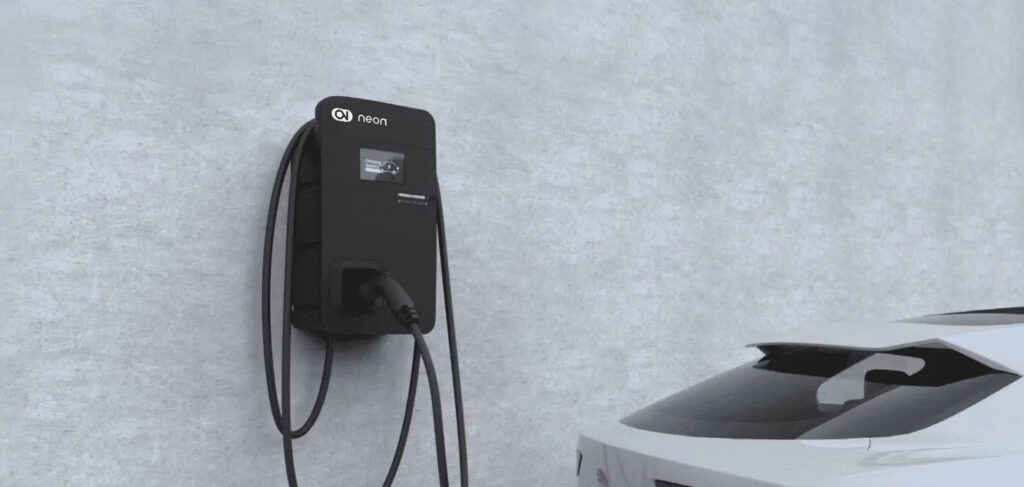
- Partner with a Reputable Provider: Work with a trusted EV charging provider such as Neon EV Charging Solutions that offers reliable hardware, software support, and warranty options.
Best Practices for EV Charger Installation
Offer a mix of charging options: Having both Level 2 and DC fast chargers ensures all EV models can be charged efficiently.
Provide clear signage and directions: Customers and employees should easily locate the charging stations.
Integrate chargers into dealership operations: Use them for test drives, vehicle servicing, and customer convenience.
Educate staff and customers: Employees should be trained on EV charging and able to assist customers with any questions.
Monitor and maintain the chargers: Regular maintenance ensures optimal performance and prevents downtime
Benefits for Car Dealerships
- Enhanced Customer Experience. Providing EV charging stations enhances the customer experience by offering a convenient and valuable service, especially for those purchasing or servicing electric vehicles.
- Competitive Advantage Dealerships with EV chargers attract more potential buyers, particularly those interested in EVs. This can be a strong selling point compared to competitors who lack this facility.
- Increased Sales Opportunities. Offering test drives for EVs with fully charged batteries allows customers to experience the vehicle’s performance firsthand, increasing the likelihood of making a sale.
- Strengthened Brand Image & Sustainability Commitment. Installing EV chargers demonstrates a dealership’s commitment to sustainability and positions it as a forward-thinking business in the automotive industry.
- Additional Revenue Streams. Some dealerships monetize their EV charging stations by offering paid charging options for public use, generating additional revenue while providing a valuable service.
- Compliance with Regulations. As governments worldwide push for cleaner transportation, dealerships with EV chargers will be better prepared to comply with future regulations and incentives.
Conclusion
Installing EV chargers in car dealerships is no longer just an option—it’s a necessity for staying competitive in the rapidly evolving automotive industry. By considering the right charging infrastructure, selecting the best EV charging solutions, following best practices, and leveraging the benefits of EV charging stations, dealerships can attract more customers, increase sales, and position themselves as industry leaders in sustainability and innovation. Working with professionals such as the Neon EV Charging Team ensures dealerships receive expert support for installation and maintenance. Investing in EV chargers today ensures a profitable and future-ready dealership for tomorrow.