

EV Charging Station Installation Cost: The Real Breakdown
Understanding the Real Cost of EV Charging Infrastructure for commercial installations
For Canadian businesses, municipalities, and property managers, installing EV chargers is no longer a fringe sustainability project, it’s a strategic investment in customer, employee, and tenant attraction. However, the financial picture is uniquely Canadian, shaped by harsh climates, varied provincial grids, and a generous tapestry of government incentives.
The total cost isn’t one figure, it’s a sum of parts. Let’s break it down. It is important to understand that this cost analysis is intended to provide a comprehensive overview of the investments required when an electrical infrastructure upgrade is necessary. The budget would be significantly lower for a project that does not entail such modernization.
The Cost Variables: A Detailed Breakdown
- 1. Hardware: The Chargers Themselves
This is the most visible cost, with a wide range depending on power and features.
- Level 2 Chargers (240V): The standard for workplaces, retail, and multi-unit residences.
Cost: $3,000 – $7,000+ per unit (for commercial-grade, networked stations).
Smart, networked chargers with robust software for access control and payment (essential for public/commercial use) cost more than basic models. Durability for Canadian winters also factors in.
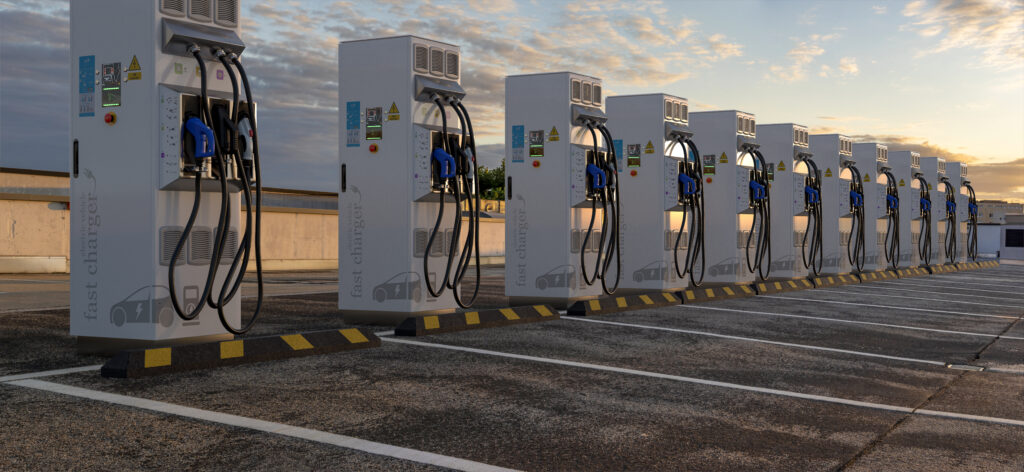
- DC Fast Chargers (DCFC / Level 3): Essential for highways, quick-turnaround retail, and fleet depots.
Cost: $50,000 – $150,000+ per unit.
Power output (50kW vs. 150kW+), brand, and required ancillary equipment (like transformer pads) cause significant variation.
- 2. Installation & Electrical Work: The “Hidden” Major Cost
This is often where budgets are challenged. It involves making your site ready.
- Electrical Upgrades: Most existing panels lack capacity. This can include new service lines, transformers, switchgear, and panel upgrades.
Cost: $5,000 – $50,000+. This is the most variable cost, dependent entirely on your site’s current electrical capacity and distance to the charger locations.
- Civil & Construction Work: Trenching, conduit installation, concrete pads for pedestals or bollards, and asphalt repair.
Cost: $2,000 – $20,000+. Site layout and distance from the electrical room are key drivers.
- Permits & Engineering: Electrical permits, site plans, and stamped engineering drawings are mandatory.
Cost: $1,000 – $5,000.
- 3. Software & Network Management
For commercial operations, hardware is just the tool. The software is the brain which allow your project to be a success and achieve your goals.
- Network Fees: Monthly/annual fees for the cloud-based platform that lets you monitor, manage access, set fees, and get diagnostics.
Cost: $200 – $800+ per charger, annually. - Payment Processing: If you charge users, payment gateway fees apply (percentage of each transaction).
- 4. Ongoing Operational Costs
- Electricity: Your utility bill will increase. Smart software helps track this usage precisely.
- Maintenance & Support: Includes annual inspections, software updates, and repair costs. Commercial chargers typically come with a 2-year warranty, but a service plan is advised especially in region where winter is more extreme. These chargers are installed in high-traffic, public environments and are routinely used by strangers with little regard for their care. This dramatically increases their risk of being broken, tampered with, or compromised.
Cost: $200 – $500+ per charger, annually (post-warranty) for level 2 charger. $4,000 – $15,000+ for Fast chargers
The Game Changer: Canadian Government Rebates & Grants
This is where the narrative changes from cost to investment. Federal and provincial programs exist specifically to lower the barrier to entry.
+ Federal: Natural Resources Canada (NRCan) – Zero Emission Vehicle Infrastructure Program (ZEVIP)
- What it covers: Up to 50% of total project costs (hardware, installation, networking) for eligible applicants, including businesses, not-for-profits, and municipalities.
- Maximum: Up to $100,000 per project for Level 2 and up to $5 million for strategic fleet and public DCFC projects.
- Key Point: Applications are competitive and process-driven. Working with a partner experienced in ZEVIP applications dramatically increases success rates.
+ Provincial Programs (Examples):
- British Columbia: BC Hydro and FortisBC offer substantial rebates for commercial Level 2 and DCFC chargers, often stacking with federal funding.
- Ontario: The EV ChargeON program supports public charging in small/mid-sized communities and destinations.
- Quebec: The Branchez-vous program offers rebates for private organizations.
- Alberta: Municipal Climate Change Action Centre (MCCAC) offers funding for EV chargers.
The Stacking Effect: In many cases, you can combine federal and provincial grants, potentially covering 60-75% of your total project costs.
Putting It All Together: A Hypothetical Scenario
Project: A mid-sized office building in Ontario installs 4 networked Level 2 chargers.
– Hardware (4 units): $20,000
– Installation (moderate electrical upgrade): $25,000
– Permits/Engineering: $4,000
– Year 1 Software: $1,200
Total Project Cost: $50,200
With Grants (Estimate):
– NRCan ZEVIP (50%): -$25,100
– Provincial Rebate (20%): -$10,040
– Net Cost to Business: ~$15,060
The investment transforms from a $50k capital outlay to a ~$15k strategic upgrade, with a much faster ROI.
Your Next Step: Get a Personalized Assessment
As you can see, a “ballpark quote” from a generic electrician without knowledge of the grant ecosystem can be misleading and cost you tens of thousands in missed funding.
Your cost is unique. It depends on your:
- Province and utility provider
- Site-specific electrical capacity
- Number and type of chargers
- Full eligibility for grant stacking
Stop searching for a number that doesn’t exist for your business yet.
Get a data-driven answer. Schedule an EV Charging Feasibility Assessment with our team.
We will:
+ Analyze your site’s electrical blueprint and usage.
+ Provide a transparent cost breakdown for hardware and installation.
+ Conduct a full Grant Eligibility Analysis for federal and provincial programs.
+ Present you with a clear net investment figure and a roadmap to installation.
Take the first step from curiosity to clarity, and turn the cost of EV charging into a calculated, subsidized investment in your property’s future.